Brake Pads vs. Brake Rotors: Key Differences and Maintenance Tips
Brakes are one of the most important safety systems in your vehicle. Every time you step on the brake pedal, you’re relying on a combination of components to slow your car down quickly and safely. Among these parts, two stand out as absolutely critical: brake pads and brake rotors. While many drivers hear about both, the differences between them, and the maintenance each requires aren’t always clear.
If you’ve ever wondered what separates brake pads from brake rotors, how they work together, and what signs of wear to look for, this guide will walk you through it. You’ll also find practical brake maintenance tips and insight into services like brake pad replacement and rotor resurfacing, so you can keep your car safe and your wallet happy.
What Are Brake Pads?
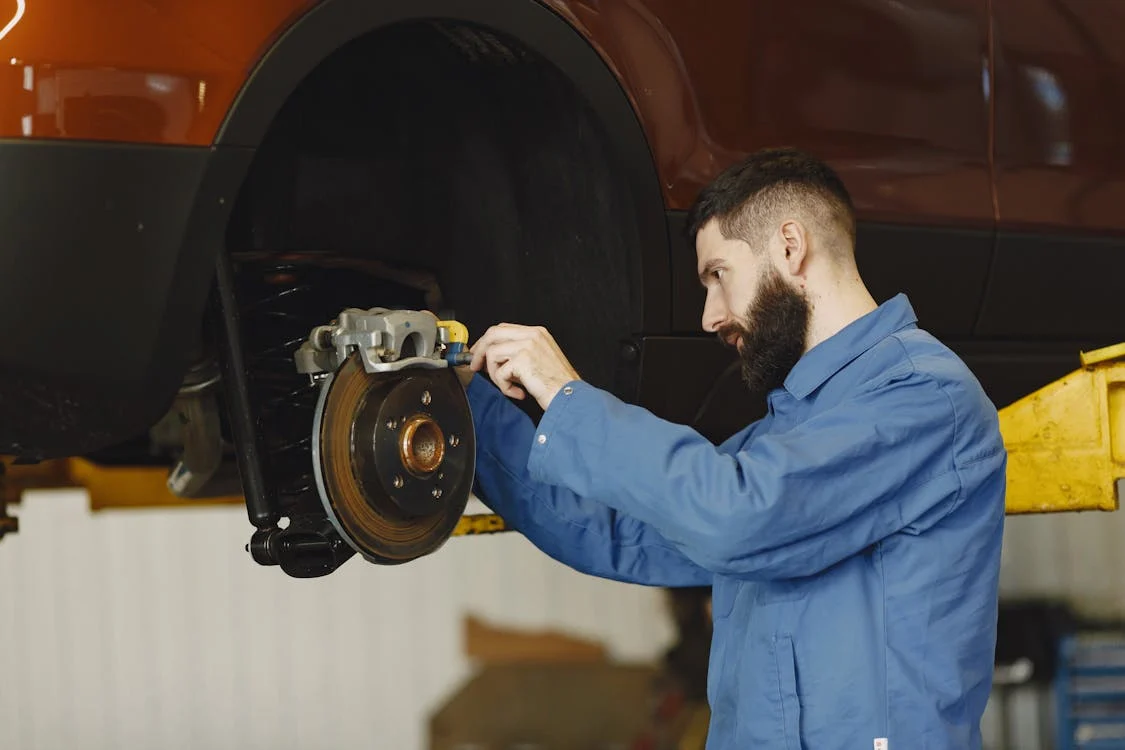
Brake pads are small but powerful components that sit inside your car’s brake calipers. When you press the brake pedal, hydraulic pressure pushes the pads against the rotors, creating the friction needed to slow down your car.
Pads are usually made of one of three main materials:
- Organic pads: Made from softer materials, these are affordable and quiet but wear faster.
- Semi-metallic pads: A blend of metals and fillers, these offer strong stopping power and durability but can be noisier.
- Ceramic pads: Known for being long-lasting, quiet, and resistant to heat, these are often pricier but provide excellent performance.
Since brake pads absorb the most friction in the system, they wear out faster than rotors. On average, pads last between 30,000 and 70,000 miles, depending on your driving habits and the quality of the pads.
What Are Brake Rotors?
Brake rotors are the large metal discs attached to each wheel. As the pads press against them, the rotors slow down the rotation of your wheels, bringing your car to a stop.
Rotors come in different designs:
- Solid rotors: Simple and durable, found in many everyday vehicles.
- Vented rotors: Designed with internal cooling channels to handle high heat, often used in larger or performance vehicles.
- Drilled or slotted rotors: Designed to improve heat dissipation and reduce brake fade, typically used in high-performance or heavy-duty applications.
Rotors are built to last longer than pads, but they aren’t indestructible. Over time, they can develop grooves, warping, or excessive wear. While resurfacing rotors can sometimes restore them, replacement may be necessary if they are too thin or damaged.
Brake Pads vs. Brake Rotors: How They Differ
Though both parts are part of the same braking system, their functions and wear patterns are very different:
- Role in braking: Pads provide the friction, while rotors provide the surface that friction acts upon.
- Material: Pads are made of softer composite materials designed to wear out over time. Rotors are solid metal, designed to withstand repeated heat and pressure.
- Maintenance: Pads need to be replaced more often, while rotors may be resurfaced or replaced less frequently.
- Signs of wear: Pads squeak or grind when worn, while rotors may cause vibrations, pulsations, or visible scoring.
Think of pads as the “shoes” your brakes wear out, while rotors are the “track” that shoes run on. Both need care to keep your vehicle safe.
Signs Your Brake Pads Need Replacement
Because brake pads wear down regularly, it’s important to recognize when they’re due for replacement. Common warning signs include:
- Squealing or screeching: This high-pitched noise is often caused by wear indicators built into the pads.
- Grinding sound: A grinding noise indicates the pads are completely worn down, and metal is rubbing against metal.
- Longer stopping distance: Worn pads reduce stopping power, which can be dangerous.
- Dashboard warning light: Many modern vehicles include a brake pad wear sensor that alerts you when it’s time for service.
If you notice these issues, schedule a brake pad replacement in Harrisburg as soon as possible. Waiting too long can damage the rotors and increase repair costs.
Signs Your Brake Rotors Need Attention
Unlike pads, rotors don’t have a simple wear indicator, so you’ll need to watch for these symptoms:
- Pulsations in the brake pedal: If the pedal vibrates or pulses when braking, your rotors may be warped.
- Steering wheel shake: Warped rotors can also cause the steering wheel to tremble when you slow down.
- Visible grooves or scoring: Deep lines or rust on the rotor surface are a sign of wear.
- Unusual noises: Grinding or scraping sounds can mean the pads have damaged the rotors.
Sometimes, rotor resurfacing can fix minor issues, smoothing out the surface to restore proper braking. But if rotors are too thin or severely damaged, replacement is the safer choice.
Brake Maintenance Guide: Keeping Your System Healthy
Your brakes are your first line of defense on the road, so regular care is essential. Here are some maintenance tips every driver should follow:
- Check brake fluid regularly
Brake fluid transfers the pressure from your foot to the brake pads. Low or dirty fluid can reduce performance and damage components. Replace it as recommended in your owner’s manual. - Listen for unusual sounds
Squeaks, grinding, or rattling are early signs of brake problems. Address them quickly before they escalate into costly repairs. - Schedule regular inspections
Have your brakes checked during oil changes or routine service. Professionals can measure pad thickness, check rotor condition, and test fluid levels. - Replace parts as needed
Don’t delay brake pad replacement or rotor resurfacing. Timely service ensures safety and prevents more expensive repairs. - Drive smart
Avoid hard, unnecessary braking. Give yourself plenty of space and brake gradually to extend the lifespan of your pads and rotors.
Affordable Brake Service in Harrisburg
One of the best ways to stay on top of brake maintenance is by working with trusted professionals who know your vehicle inside and out. At Sam’s Auto Repair in Harrisburg, we offer complete brake services, from brake pad replacement to rotor resurfacing, all at affordable prices. Our ASE-certified team uses top-quality parts and precise techniques to keep your brakes in peak condition.
We treat every vehicle like our own, so whether you’re in for routine brake care or more complex repairs, you’ll drive away with confidence knowing your car is safe. And if you’re also in the market for a reliable pre-owned car, you’ll find a carefully inspected selection on our lot—making us your one-stop destination for all your automotive needs.
Don’t wait until your brakes fail to give them the care they deserve. Schedule your next brake service with Sam’s Auto Repair in Harrisburg today.